Artwork Description and Definition
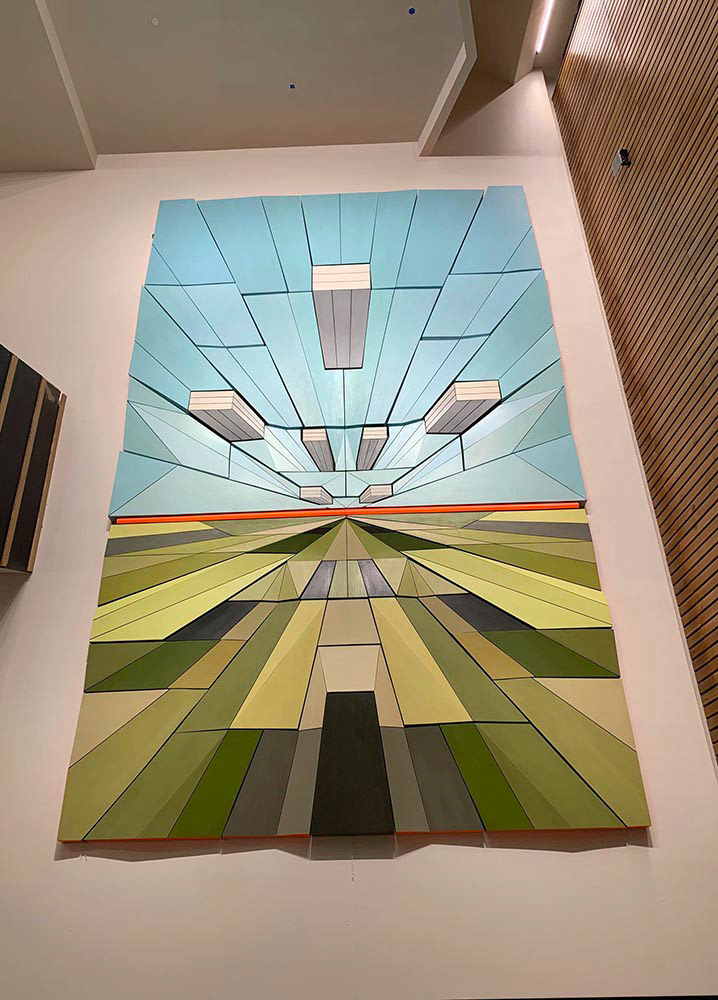
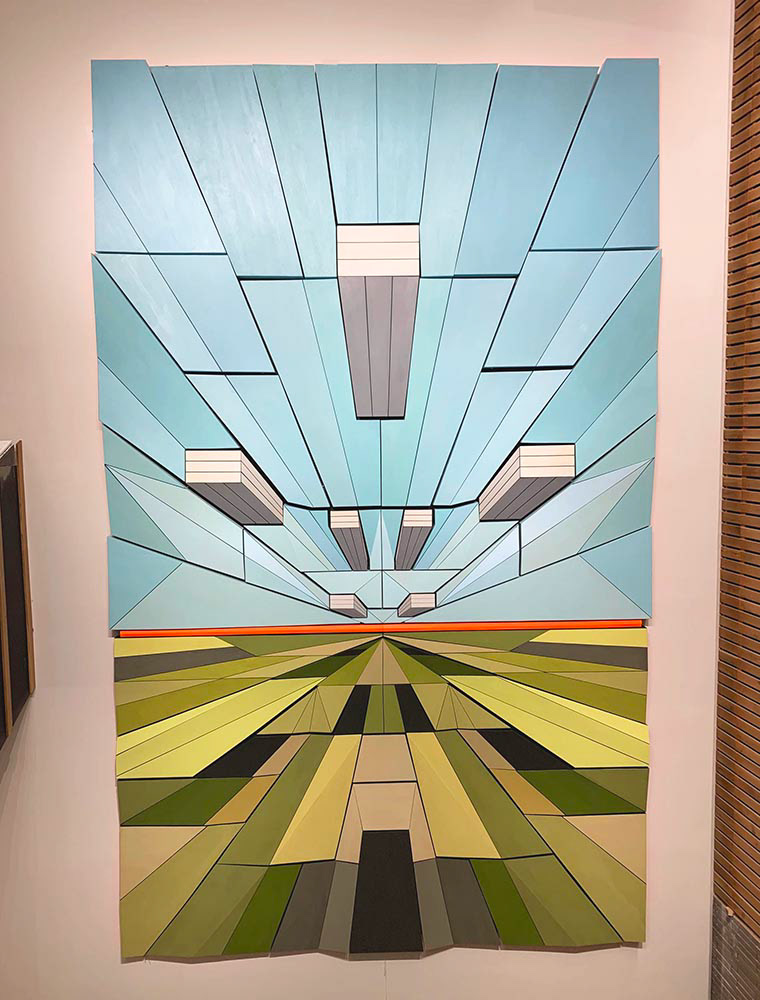
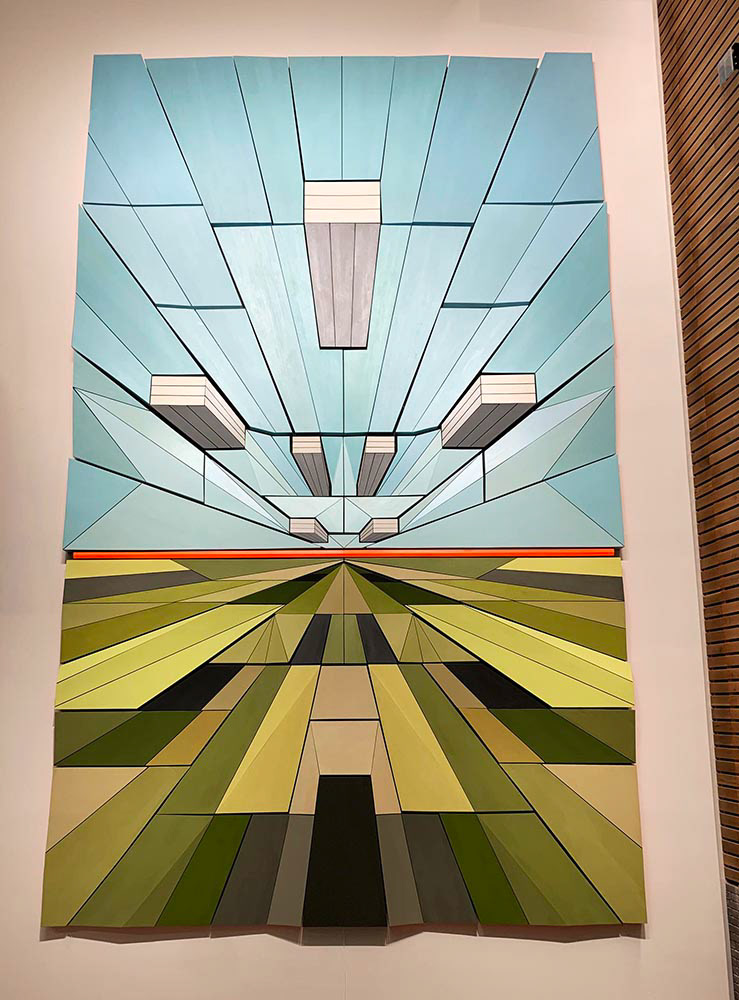
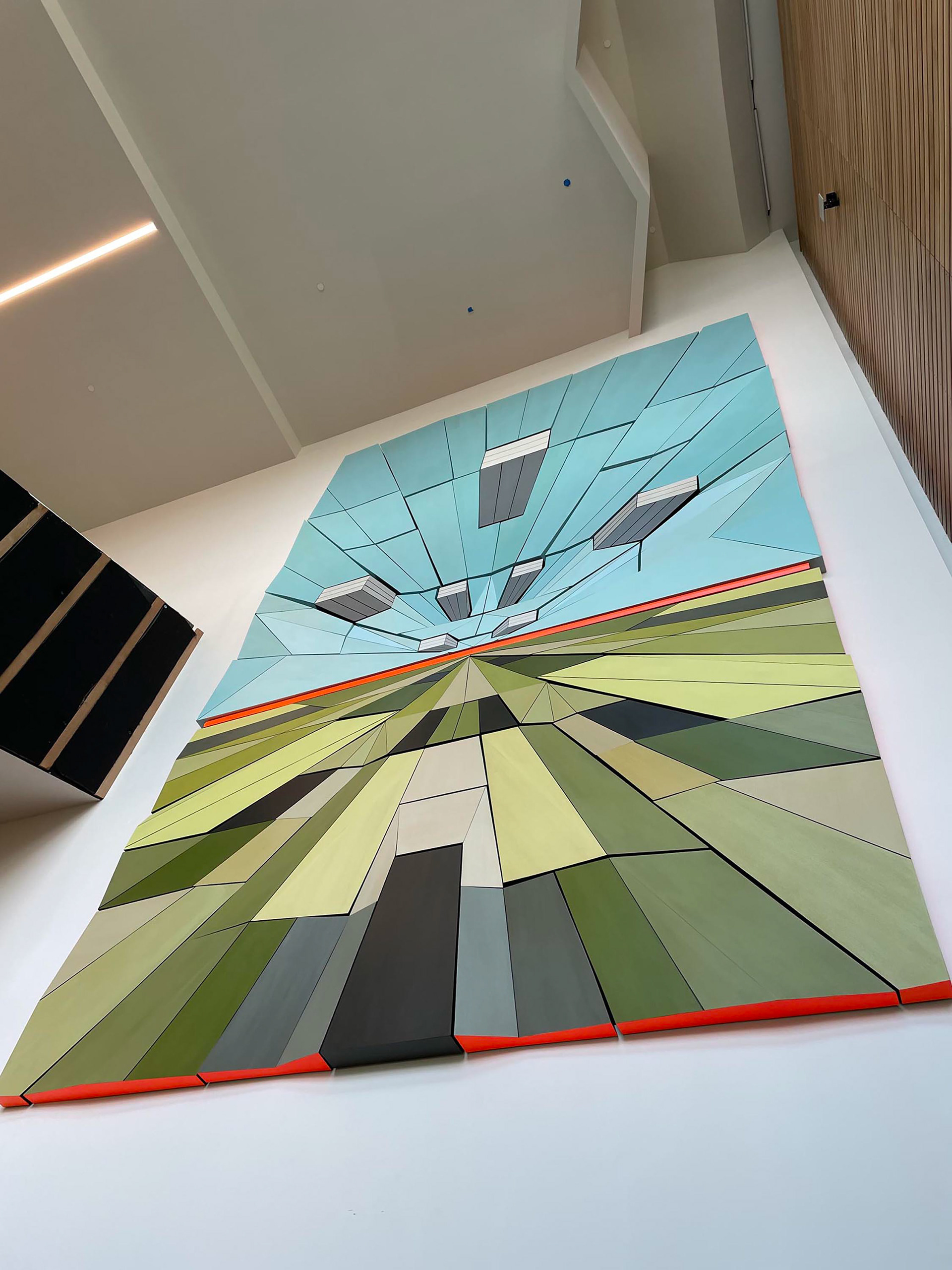
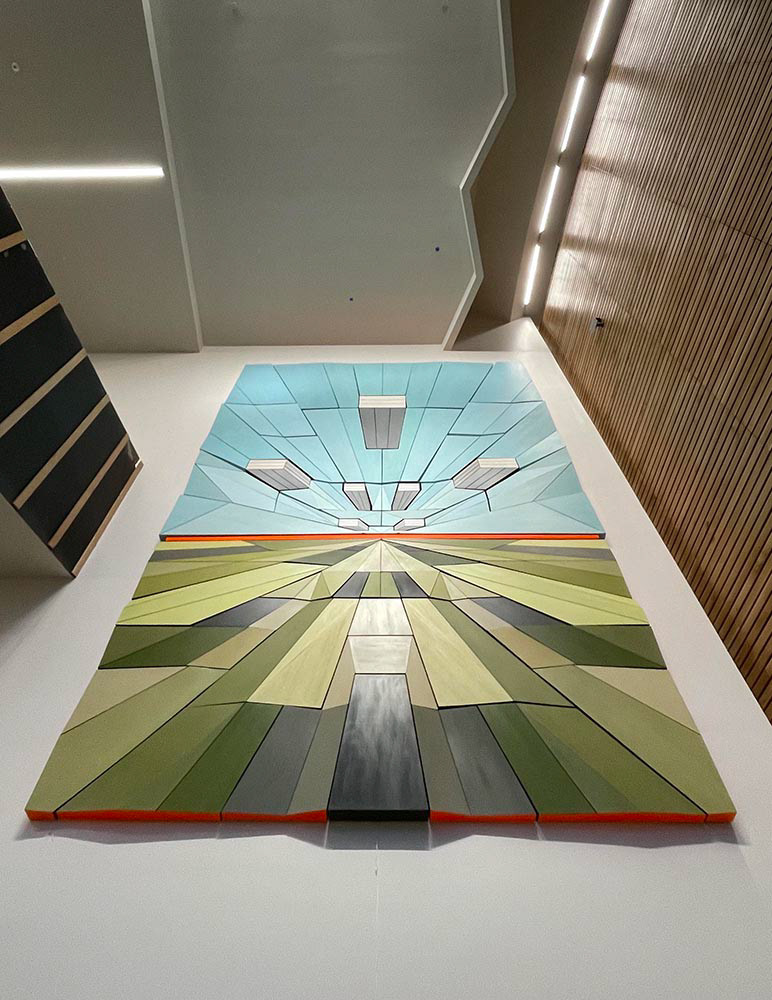
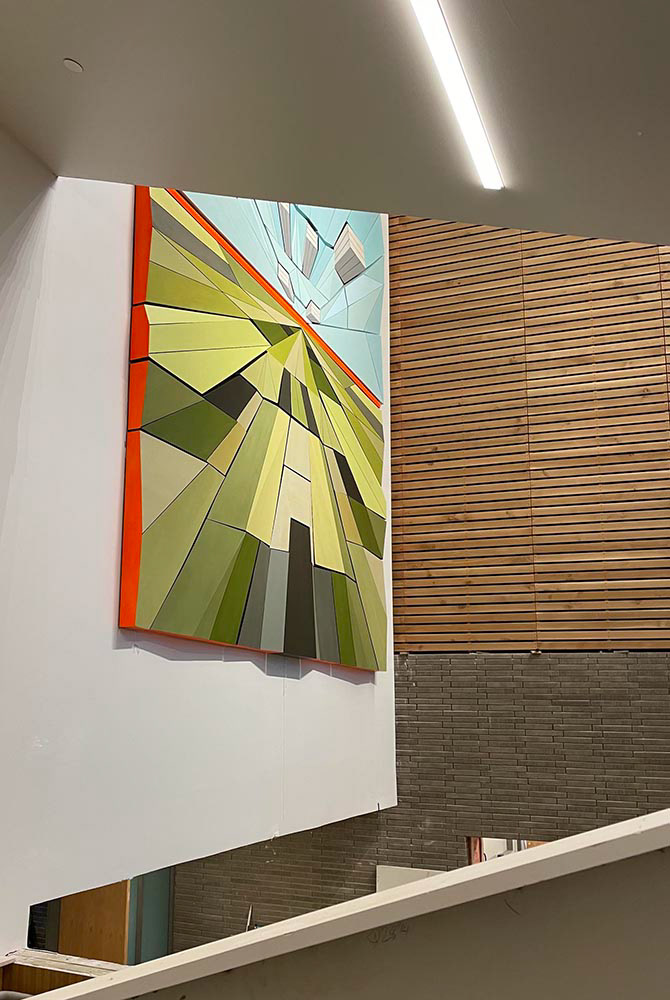
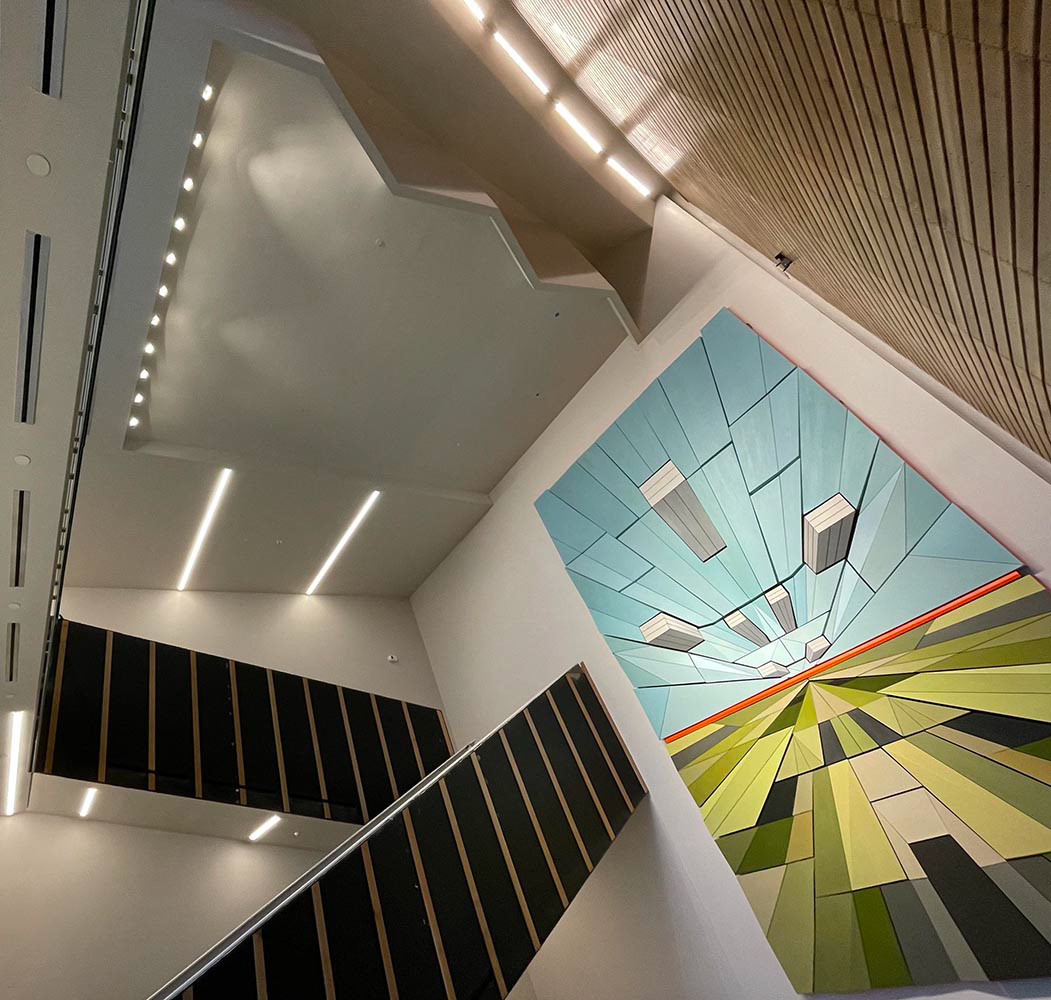
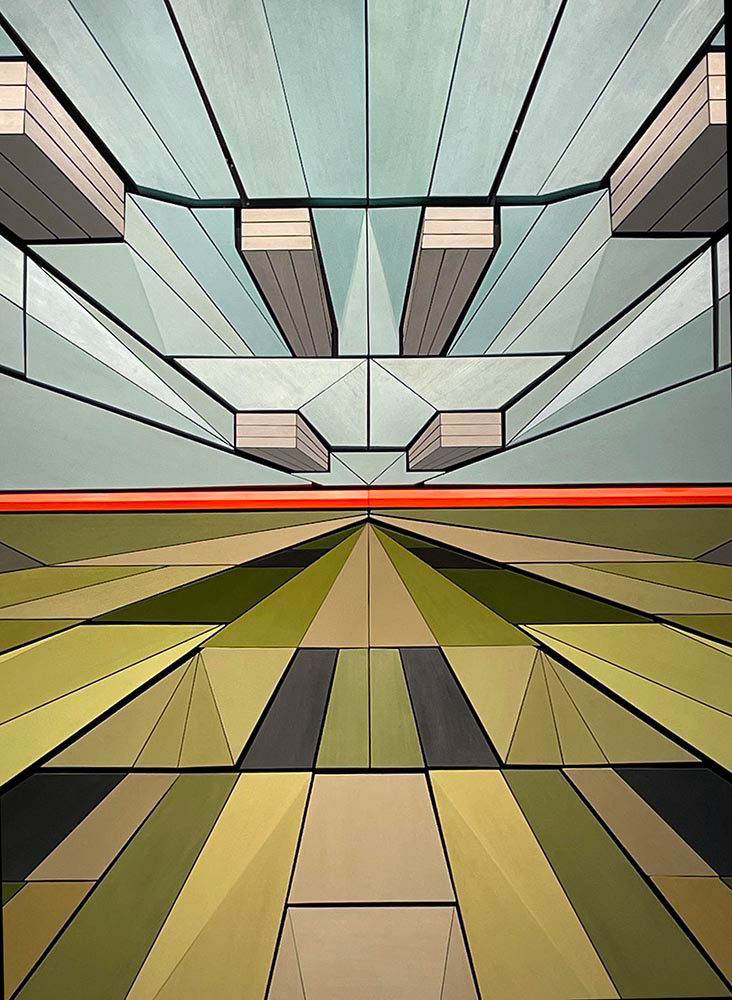
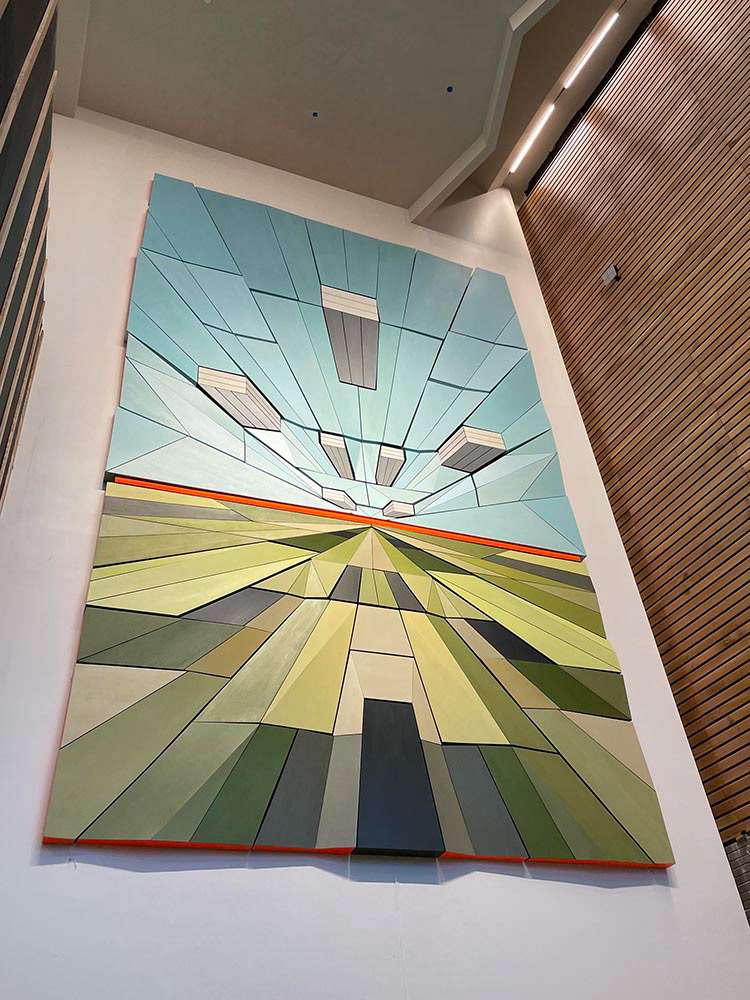
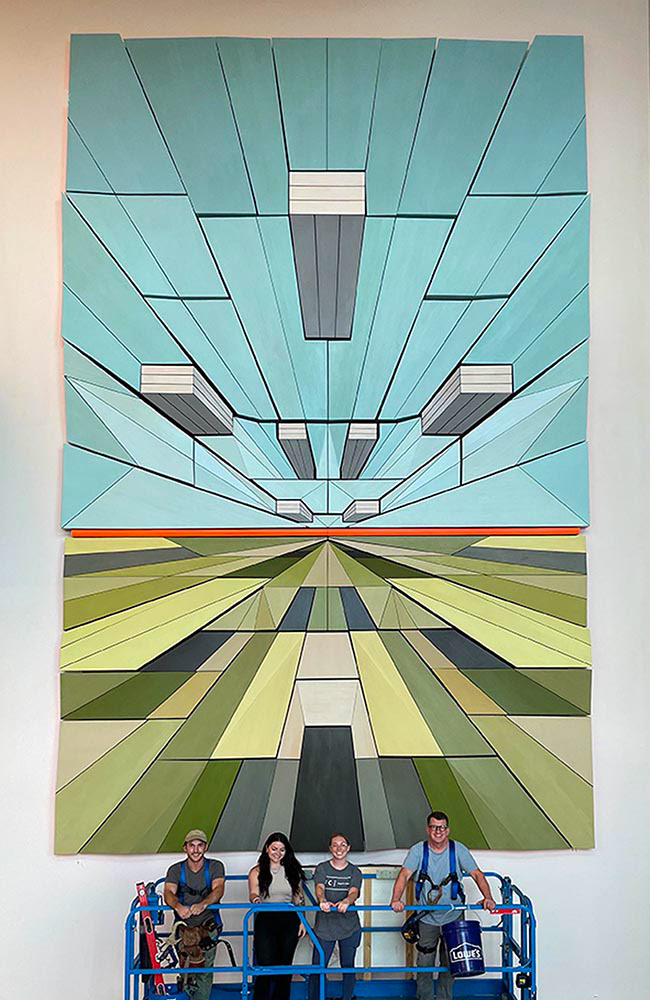
Cloud Field Ferry is composed of 64 panels hand-crafted by Critz Campbell for the U.S. Courthouse in Greenville. Through abstracted imagery of river, earth, and sky, their arrangement invites contemplation, of and a quiet reflection on, the region’s landscape and layered history. The work depicts an abstracted and idealized representation of blue sky and cultivated farmland, organized around a single vanishing point. The imagery is a meditation on the Mississippi Delta that explores landscape, movement, and memory through seven suspended vessels traversing a faceted sky. The composition’s shadows and geometric forms evoke the rhythms of the river, migration, and human experience.
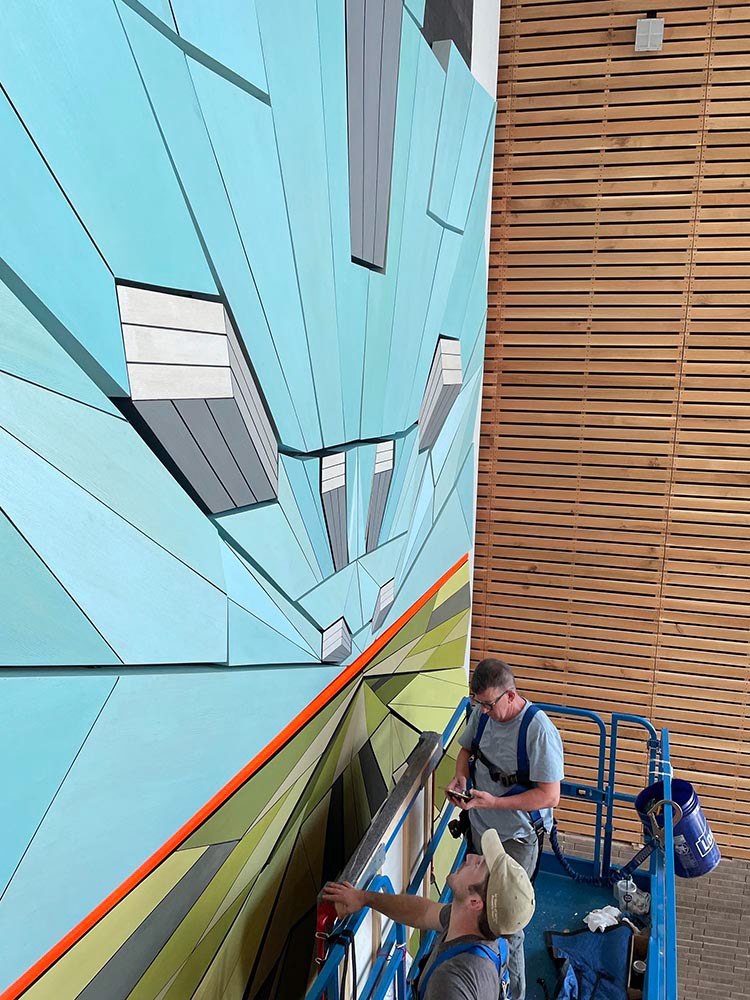
According to Campbell, the seven floating forms may read as clouds, barges, or a wooden fleet. Metaphorically, the shapes may represent the passing of energy, matter, and time — or evoke river commerce, the migration of wildlife, or a diaspora. The seven vessels also reference ancient numerical representations of perfection. Shadows on the landscape mirror the seven vessels traveling overhead. Faceted, multicolored parcels conjure the familiar partitioning and cultivation of farmland. The reflection of shadow and form could evoke the scales of justice, a middle way, or balance in the natural world. The fabrication and hand-burnished wood grain soften the composition's rigid geometry, giving the appearance of a quilt sewn by hand or a stained-glass window set piece by piece.
Cloud Ferry is conceived as a central point of interest within the federal campus, welcoming employees and visitors to the complex. Visually, the color patterning of the artwork reflects the earth tones of the adjacent open space on the courthouse lawn, just outside of the three-story atrium. In this way the artwork is a mirror to its hosting landscape. The artwork’s composition, with its angular forms radiating from a central point, appears as though it is bursting. This gives the artwork a subtle dynamic quality, which is enhanced by viewing the work from different locations within the atrium
Inspired by the history and the culture of Mississippi, the artwork reflects the ecology and social history of the land on which the federal campus sits. The artwork’s careful craftsmanship, combined with the symmetry of the artwork’s design and placement, conveys balance and stability. This work enhances the tone and tenor of permanence that is appropriate for a federal courthouse while also activating its central hub.